Heated garages and custom finishes: are they worth the cost?
By Elena Whitfield · Updated 2026-06-03
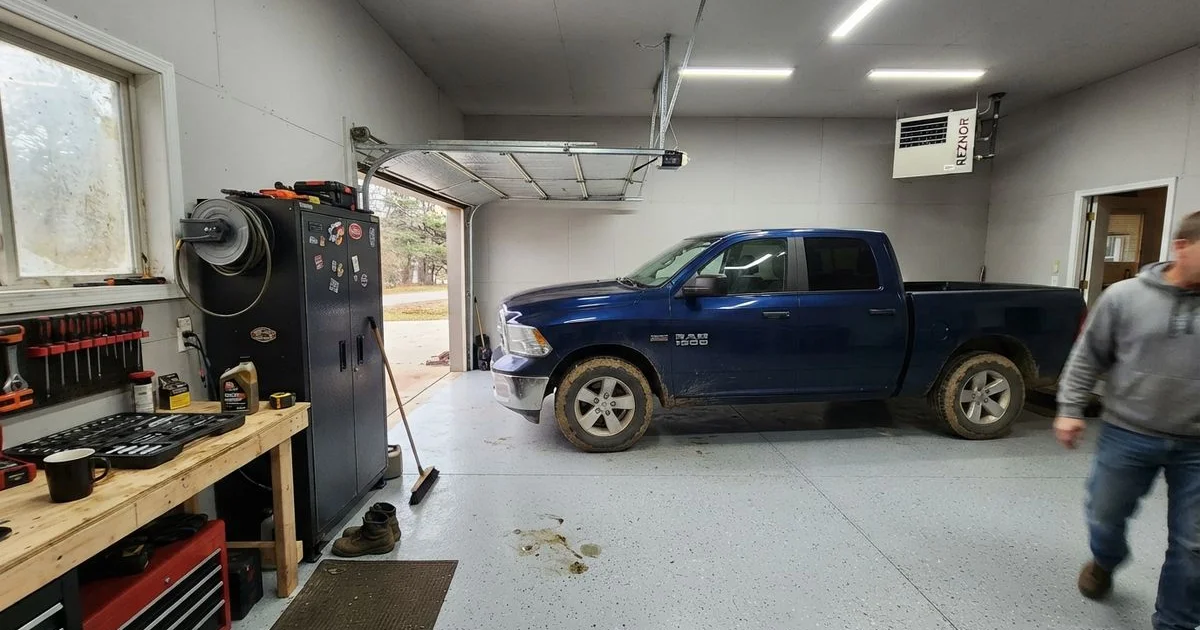
A basic garage shell does the job of keeping a car dry. A heated, finished garage does a lot more, but it also costs meaningfully more, and the value of that gap depends entirely on how you actually plan to use the space.
What “custom finishes” typically means
Beyond a standard drywalled and insulated interior, custom finishes usually cover things like epoxy or polyaspartic floor coatings, upgraded lighting, built-in storage or cabinetry, and sometimes higher-end garage door styles. Heating is often bundled into this tier as well, since a heated garage almost always needs full insulation and a vapour barrier to work efficiently. For the base construction price before any of these upgrades, see our guide on what a detached garage costs in Ontario.
Where the value genuinely shows up
A workshop or hobby space. If you plan to spend real time in the garage, woodworking, mechanical work, general projects, heating and a durable, easy-to-clean floor coating pay off in comfort and usability almost every week of the year in Ontario’s climate.
A home gym or flexible living space. Heated, finished garages increasingly double as informal gyms or extra living space. The comfort difference between a heated and unheated space in January is not subtle.
Long-term durability. An epoxy or polyaspartic floor coating resists the salt, moisture, and grime that an Ontario winter tracks in, and it holds up better over time than bare concrete, which cracks and stains more easily.
Where the value is thinner
If the garage is purely for parking and occasional storage, a heated, fully finished interior adds cost without adding much day-to-day benefit. A vehicle does not need a heated space to survive winter, and basic insulation alone, without full heating, already helps moderate temperature swings for stored items.
Cost and benefit at a glance
| Upgrade | Typical value driver | Best fit |
|---|---|---|
| Insulation and drywall | Moderates temperature, basic comfort | Almost any regular-use garage |
| Radiant floor heating | Efficient, even heat for consistent use | Workshops, long-duration use |
| Forced-air unit heater | Lower install cost, good for occasional use | Occasional workshop or hobby use |
| Epoxy/polyaspartic floor | Durability, easier cleaning, resists salt damage | Any garage seeing regular vehicle or foot traffic |
| Custom cabinetry and lighting | Organization, everyday convenience | Owners prioritizing daily usability |
How to decide what to upgrade
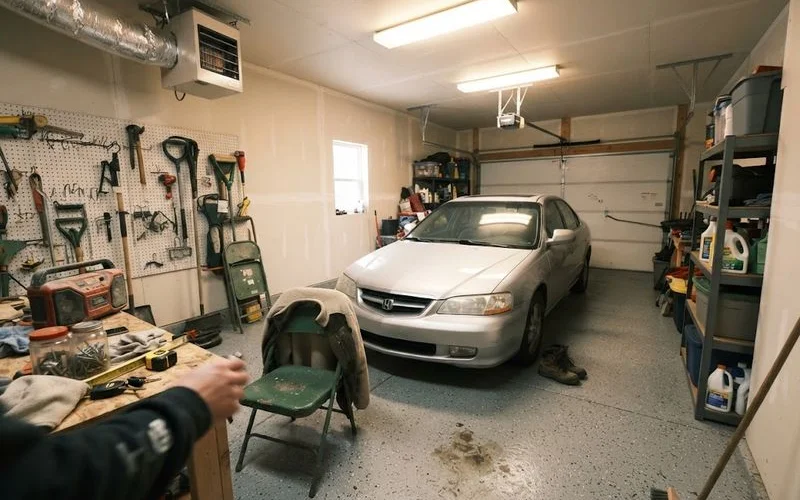
Start with how you will actually use the space more than what looks best in a showroom. A garage used a few hours a week for hobbies justifies heating and a durable floor far more easily than a garage that sees a car pull in and out and nothing else. Insulation is close to a universal upgrade worth including regardless of use, since it is relatively inexpensive compared to full heating and pays off in both comfort and reduced condensation issues.
If budget is tight, sequencing matters: insulation and a vapour barrier first, since heating without them is inefficient, then a floor coating if durability and cleanliness matter to you, then heating itself if the space gets regular use. Purely cosmetic upgrades are the easiest to defer or skip without losing real functionality.
Building for heating vs retrofitting later
It is almost always cheaper to include insulation, a vapour barrier, and rough-in wiring for heating during initial construction than to retrofit them into a finished garage later. Opening up drywall and reworking a slab to add radiant heat after the fact adds labour cost that a new build avoids entirely. If your budget cannot stretch to full heating right away, ask your builder about roughing in the wiring or plumbing lines during construction so the upgrade is simpler and cheaper to add in a year or two.
Running costs to factor in
Beyond the upfront build cost, a heated garage adds an ongoing utility cost that varies with size, insulation quality, and how often the space is used. Radiant floor heat tends to be more efficient for a space heated most of the day, while a forced-air unit heater that only runs when you are actively in the garage can be cheaper to operate for occasional use, even though it may cost less to install too. Ask a builder or HVAC contractor for a rough sense of expected running costs based on your local utility rates before committing to one system over the other.
To compare Ontario builders who specialize in heated and custom-finished garages, see our custom finishes and heated garages directory, ranked using the approach described on our methodology page. Visit the homepage for the full directory across all garage project types.
FAQ
- Is heating a garage worth it in Ontario's climate?
- For anyone using the garage as a workshop, gym, or regular winter workspace, most owners find it worth the added cost. If the garage is purely for parking, the case is weaker, since a car does not need the space heated to survive an Ontario winter.
- What heating options are typically used in Ontario garages?
- Radiant floor heating and forced-air unit heaters are the two most common approaches. Radiant floor heat tends to run more efficiently for consistent, long-duration use, while a unit heater is often cheaper to install and better suited to occasional use.
- Do I need to insulate before I heat a garage?
- Yes. Heating an uninsulated garage wastes most of the energy you are paying for. Insulation and a vapour barrier should come before or alongside any heating installation, not as an afterthought.
- Which custom finishes add the most everyday value?
- Epoxy or polyaspartic floor coatings and proper insulation tend to get mentioned most often by owners as finishes they use and notice daily, more than purely cosmetic upgrades like trim or lighting packages.